If you live near the ocean in Miami Beach, you know the breeze can be your best friend and your HVAC system’s biggest challenge. Salt air does more than leave a film on windows. It speeds up corrosion on outdoor equipment, which can lead to surprise breakdowns and costly replacements. The good news is you can slow that wear with a smart mix of materials, coatings, siting, and a consistent maintenance rhythm.
In this guide, you’ll learn why salt air is so aggressive, what to install or upgrade to resist it, and how to set a practical maintenance schedule based on your distance to the shore. You’ll also see tips tailored for condos and single-family homes in Miami Beach. Let’s dive in.
Why salt air attacks HVAC in Miami Beach
Salt spray carries sodium chloride that deposits on outdoor units. In Miami Beach, warm temperatures, high humidity, and regular onshore winds keep those deposits moist. Salt lowers the electrical resistance of that moisture film, which accelerates galvanic and pitting corrosion on metals and attacks coil fins, tubes, fasteners, and electrical contacts.
You will see the impact most on outdoor condensers, rooftop units, fan motors, coil fins and tubes, exterior service valves, and condensate components. Common outcomes include reduced heat transfer from fin loss, fan motor failures, control and contactor issues, refrigerant leaks from pitted tubing, rusted cabinets, and clogged drains and pans.
What to install for coastal durability
Selecting the right materials and finishes at installation can add years of useful life and reduce repairs.
Better metals and fasteners
- 316 stainless steel offers the best common resistance to pitting in chloride environments. Use it for fasteners, brackets, and exposed hardware where you can.
- 304 stainless is better than carbon steel or standard galvanized parts but is less resistant than 316 near active spray.
- Hot-dip galvanized or galvanneal cabinets are reasonable, but they will not last as long in direct sea-spray zones as stainless.
- Aluminum fins are standard and efficient, but they can pit in salt exposure. Plan to protect them with a coating.
- Choose non-metal options like PVC, ABS, or fiberglass for condensate pans and drain parts to avoid corrosion entirely.
Coil options and protective coatings
- Standard coils use copper tubes with aluminum fins. Both metals are vulnerable to chloride-induced corrosion without protection.
- Coated coils are a strong choice in Miami Beach. Factory-applied epoxy, polymer, or fluoropolymer coatings create a barrier that slows corrosive attack. Hydrophobic and nano coatings help shed water and reduce salt retention.
- Stainless steel coils are available for extreme environments. They cost more but can pay off where longevity is a priority.
Motors, wiring, and lines that last
- Specify sealed, thermally protected condenser fan motors with corrosion-resistant housings. Motor shafts and fasteners should be stainless or coated.
- Protect refrigerant lines with jackets or wraps to reduce exposed copper. Shield service valves and fittings.
- Use washable prefilters on outdoor air intakes when feasible and clean them more often to reduce salt and dust ingestion.
Consider a factory coastal package
Most manufacturers offer “coastal” or “marine” packages. Typical upgrades include coated condenser coils, epoxy or powder-coated cabinets, stainless hardware, corrosion-resistant fan motors and blades, extra shielding, and sometimes extended corrosion warranties. If you are installing new or replacing a unit anywhere near the beach, a coastal package is often the simplest path to longer service life.
Maintenance schedule by distance to shore
Salt exposure changes by distance, elevation, and whether your unit faces onshore wind. Use these rules of thumb to set your cadence. Always follow manufacturer instructions and document service to protect warranties.
Very high exposure: 0 to 0.25 miles
- Visual check monthly for salt crusting, rust, loose hardware, and debris.
- Freshwater rinse every 2 to 4 weeks. Use a gentle garden hose. Rinse from the inside out through the coil if access panels allow, so you do not push debris deeper into the fins.
- Professional coil cleaning and inspection every 3 months. Use manufacturer-approved cleaners that are neutral to metals and coatings. Avoid high-pressure washing.
- Filters monthly. Consider a washable prefilter to cut salt loading.
- Condensate drain and pan monthly. Confirm free flow and clean as needed. Prefer non-metal pans.
- Electrical checks every 3 to 6 months. Inspect contactors, terminals, and disconnects.
- Fan motor checks and lubrication every 6 months.
- Full professional system check annually, including coils, refrigerant charge, compressor health, and cabinet condition.
High to moderate exposure: 0.25 to 1 mile
- Visual check every 1 to 2 months.
- Freshwater rinse every 4 to 8 weeks.
- Professional coil cleaning and inspection every 6 months.
- Filters every 1 to 2 months.
- Condensate drain and pan monthly or every 2 months.
- Electrical check every 6 to 12 months.
- Full professional inspection annually. Add a mid-year check if you have heavy wind events.
Moderate to low exposure: over 1 mile or well shielded
- Visual check every 2 to 3 months.
- Freshwater rinse every 2 to 3 months or after storms.
- Professional coil cleaning and inspection annually.
- Filters every 1 to 3 months, based on use and indoor air quality.
Procedural notes that protect your unit
- Always rinse with fresh water. Do not use a pressure washer on coils unless a technician confirms safe pressure and method.
- Choose cleaners approved by the manufacturer, and use neutralizers as required.
- Keep a written log and photos at each service to track condition and support any warranty claim.
Condo vs single-family plans in Miami Beach
Your property type can change exposure, access, and who is responsible for maintenance.
Condos and HOAs
- Rooftop or seaward-facing condensers often see the heaviest spray and wind. That means more frequent rinsing and professional cleanings.
- Check HOA documents to confirm who maintains rooftop and common-area equipment. Many associations control schedules, contractors, and budgets.
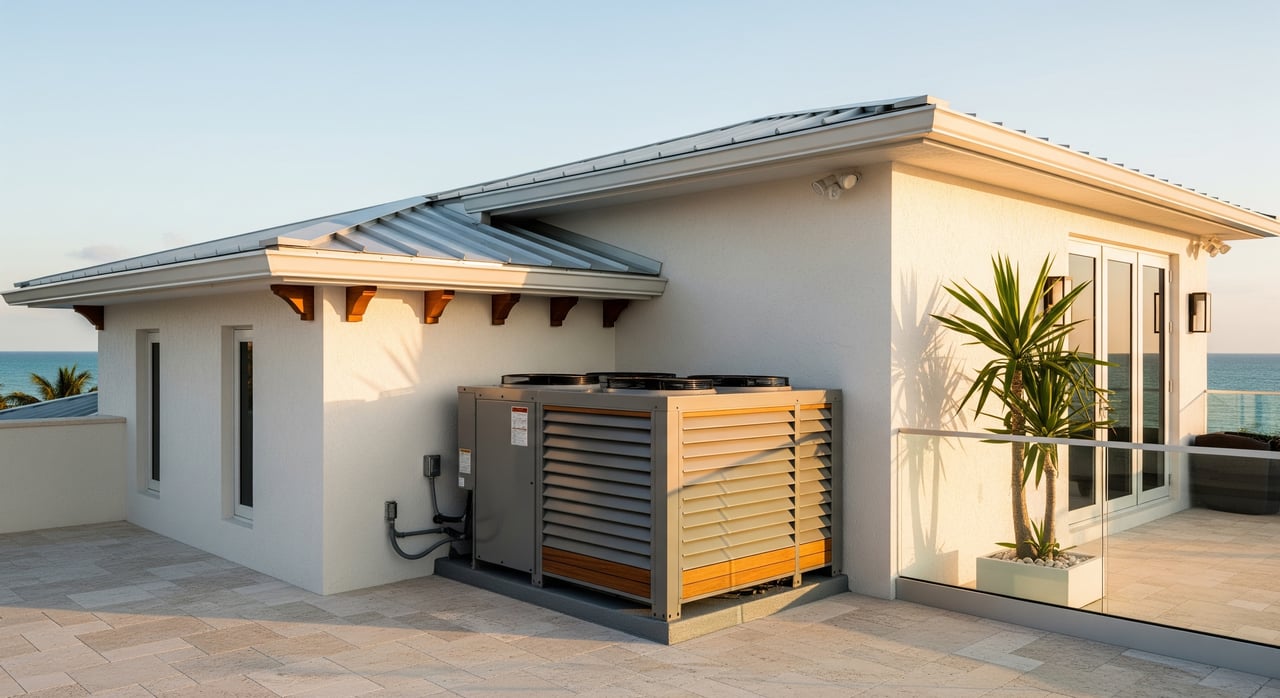
- Push for coastal-rated equipment on rooftop installs and use enclosures, louvers, or screens that block direct spray while preserving airflow.
- Ask the association to hold a centralized maintenance contract for rinsing and inspections, and confirm the contractor follows manufacturer-approved methods.
- Miami-Dade structural and hurricane codes govern rooftop attachment. Corrosion mitigation is generally an owner or HOA policy decision, so put maintenance standards in writing.
Single-family siting and shielding
- You have more control over location. Place the condenser on the leeward side of the home when possible, and raise it on a platform to avoid storm splash.
- Use fencing or strategic landscaping as a wind break, while maintaining proper clearance for airflow and service access.
- Balance distance to the air handler. Longer line sets can raise install cost and affect performance.
Warranty, records, and insurance
- Many manufacturers require specific maintenance for coastal use and may limit corrosion coverage. Read the warranty details and keep service records.
- Expect shorter life in direct seaward installations. Budget for more frequent service and earlier replacement.
- Some insurers or associations set corrosion protection or inspection requirements. Verify what your policy or building rules need from you.
Quick checklist and decision guide
Use this compact checklist to keep your system on track:
- Monthly: visual check of the outdoor unit and condensate drain. Rinse monthly if you are within 1 mile of the ocean; every 2 to 4 weeks if you are closer than 0.25 miles.
- Every 1 to 3 months: replace filters. Add washable prefilters if salt loading is high.
- Every 3 to 6 months: in higher exposure zones, schedule professional coil cleaning and electrical checks.
- Annually: full professional service, including coils, refrigerant charge, safety controls, motor bearings, and cabinet condition.
- Always: log dates, services performed, and photos of coil and cabinet condition.
Here is a simple decision guide for upgrades:
- Choose a factory coastal package if you are within about 0.25 miles of open ocean, on a rooftop, or directly facing onshore winds.
- If a full upgrade is not feasible, target the highest-impact items: coated coils, 316 stainless fasteners and hardware, sealed fan motors, protected line sets, and non-metal condensate components.
- If you plan long-term ownership, weigh the life-cycle value. Upgrades and maintenance usually cost less than early coil or compressor replacements.
Smart cost planning
Coastal packages and stainless components cost more up front, but they reduce repair risk and downtime in Miami Beach’s marine air. Frequent professional cleanings in high-exposure zones are commonly cheaper than major component replacements. Get quotes for both a coastal-rated unit and a maintenance contract. Compare expected service life and repair risk so you can choose the path that lowers your total cost over time.
Ready to protect your coastal HVAC?
A little prevention goes a long way in Miami Beach. If you are weighing upgrades before you sell, planning a remodel, or budgeting for a new system, start with the steps above and keep a consistent service cadence. For property guidance that aligns your lifestyle and investment goals across South Florida, connect with the team at Unknown Company. We are here to help you make confident coastal decisions.
FAQs
How does salt air affect an outdoor HVAC unit?
- Salt deposits lower the resistance of surface moisture, which speeds galvanic and pitting corrosion on coil fins, tubes, cabinets, fasteners, and electrical contacts.
What is the best maintenance schedule near Miami Beach’s shoreline?
- Within 0.25 miles, rinse every 2 to 4 weeks and schedule professional coil cleaning every 3 months, with monthly filters and a full annual check.
Are factory coil coatings worth it for coastal homes and condos?
- Yes in high-salt zones. Coated coils and corrosion-resistant hardware extend service life and reduce repair frequency compared with unprotected coils.
What materials should I ask for when installing a new unit?
- Prioritize coated coils, 316 stainless fasteners and exposed hardware, sealed fan motors, protected line sets, and non-metal condensate pans and drains.
Will rinsing my condenser with fresh water void the warranty?
- Typically no, but follow the manufacturer’s cleaning instructions and keep records. Avoid high pressure and harsh chemicals that can damage coils or coatings.