If you are eyeing a luxury townhome in Fort Lauderdale, the finishes and location may grab your attention first. But in this market, the smartest buyers look beyond the designer kitchen and rooftop terrace. You also need to understand ownership structure, flood exposure, association obligations, and waterfront upkeep before you commit. Let’s dive in.
Why Fort Lauderdale townhomes stand out
Fort Lauderdale offers a lifestyle that draws luxury buyers for good reason. The city highlights its 165 miles of scenic inland waterways, seven miles of shoreline, the Riverwalk district, and Las Olas Boulevard as major lifestyle anchors.
That setting makes townhomes especially appealing if you want a blend of privacy, usable space, and convenient access to downtown or the water. In many cases, a luxury townhome can feel like a middle ground between a condo and a detached home.
Know what a townhouse is
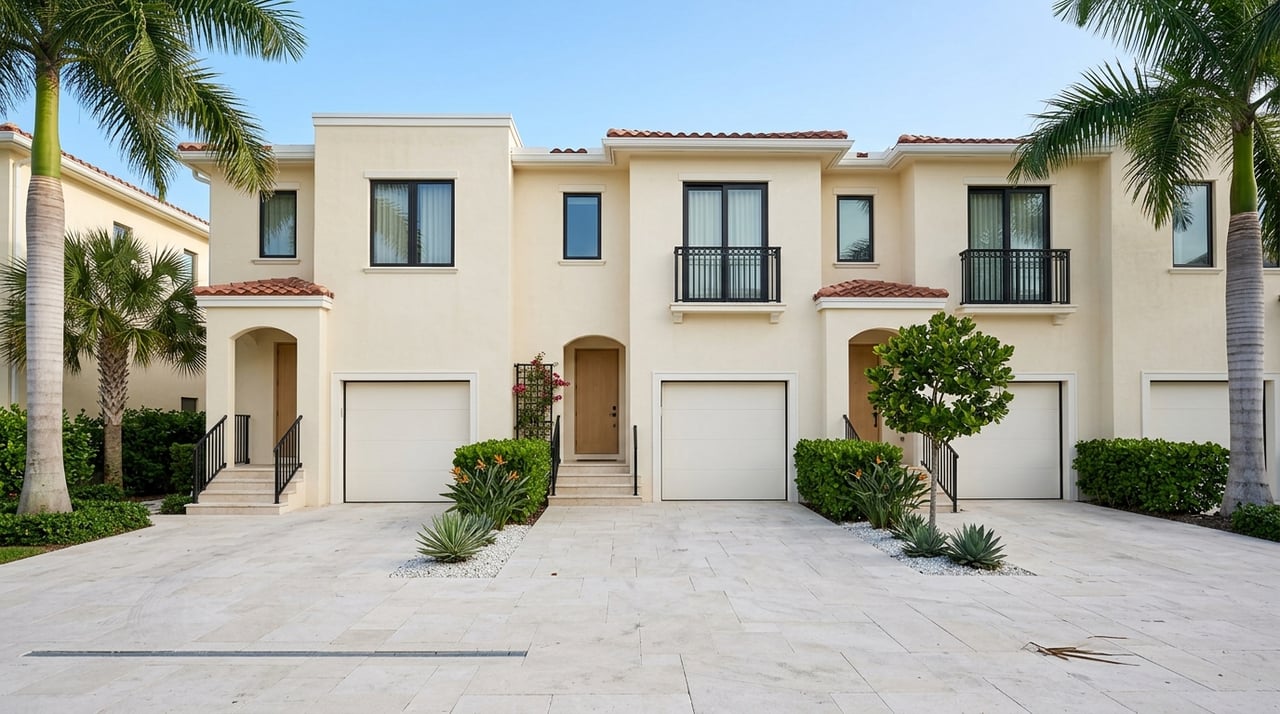
In Fort Lauderdale, a townhouse development is defined in the city code as three or more attached single-family dwelling units where each unit and the land under it are owned in fee simple. That distinction matters because a fee-simple townhome is not the same as a condominium unit, even if the homes may look similar from the street.
For you as a buyer, this is one of the first things to confirm. The recorded ownership form shapes how maintenance works, what dues cover, what disclosures you receive, and how smooth or complicated resale may be later.
Fee-simple townhome vs condo townhome
A luxury townhome can fall into one of two broad buckets:
- Fee-simple HOA townhome governed under Florida Chapter 720
- Condominium-form townhome governed under Florida Chapter 718
This is not just legal fine print. It affects your monthly costs, your rights during the contract period, the association’s maintenance duties, and your exposure to future assessments.
Review association documents early
Before you fall in love with the finishes, review the documents that explain how the community runs. In luxury townhome communities, the association can shape your ownership experience almost as much as the property itself.
For HOA-governed townhomes, Florida requires a disclosure summary before signing. If that summary is not provided, the contract is voidable by the buyer within three days after receipt or before closing.
For condo-form townhomes, buyers are entitled to key documents such as the declaration, articles, bylaws, rules, annual financial statement, budget, and FAQ sheet. If applicable, the association must also provide items like the milestone inspection summary, the most recent structural integrity reserve study, and the turnover inspection report. Resale contracts for condominiums include a seven-day voidability right after receipt of the required documents.
What to look for in the paperwork
As you review the association package, focus on practical questions like:
- What do the dues actually cover?
- Are reserves fully funded?
- Are special assessments pending or likely?
- Are there transfer fees?
- Is buyer approval required?
- Is there a right of first refusal?
- Are there property use restrictions that affect your plans?
These details matter because Florida law specifically warns that assessments and special assessments can change, and unpaid assessments can become a lien on the property.
Pay close attention to reserves and assessments
A luxury price point does not automatically mean a healthier association budget. You still need to understand how the community handles deferred maintenance and larger capital projects.
HOA budgets may include reserve accounts for capital expenditures and deferred maintenance. If reserves are not fully funded, the annual financial report must include a warning that special assessments may result.
That is a major point for buyers who want predictable carrying costs. A lower monthly due can look attractive at first, but it may come with more risk if the community has not set aside enough for future repairs.
Request the estoppel before closing
One of the most useful diligence tools is the estoppel certificate. For both HOAs and condominiums, it must be issued within 10 business days of request.
This document can help you confirm:
- Regular assessments
- Special assessments
- Transfer fees
- Open violations
- Transfer approval requirements
- Right of first refusal issues
- Association insurance contacts
In a luxury transaction, that clarity is important. It helps you understand not just what you are buying, but also what financial and procedural obligations may come with it.
Understand maintenance responsibility
Luxury buyers often assume a townhome means less maintenance than a detached home. That can be true, but only if you know exactly what the association maintains and what remains your responsibility.
For condominium associations, the association is responsible for maintaining the common elements except for limited common elements assigned to unit owners by the declaration. Unit owners also may not do anything that adversely affects the safety or soundness of the common elements or property maintained by the association.
For fee-simple townhomes, responsibilities may be structured differently. That is why the declaration, budget, and governing documents deserve a close review before you move forward.
Factor in building age and inspections
In Broward County, the Building Safety Inspection Program applies to buildings and structures that are 25 years or older, with repeat inspections every 10 years. However, the program expressly exempts fee simple townhouses as defined in the Florida Building Code.
That creates an important difference in older communities. If you are comparing a fee-simple townhome with a condo-form property or another attached structure, your future inspection and repair exposure may not be the same.
Flood risk should be a top priority
In Fort Lauderdale, flood risk is not a side issue. The city describes itself as low-lying and surrounded by waterways, with most residents living in or close to a Special Flood Hazard Area.
The city also notes that Fort Lauderdale is vulnerable to sea-level rise, extreme rain, and tidal flooding because of its flat topography, shallow aquifer, and coastal geography. For a luxury buyer, this means location appeal and water access should always be balanced against flood exposure and insurance costs.
Check the flood zone before you buy
The city advises homeowners and renters to look up flood zones using the city GIS and FEMA maps. It identifies Zones AE, AH, AO, and VE as high-risk areas where mandatory flood-insurance purchase requirements apply.
Zone X is outside the mapped 1 percent annual chance floodplain and does not require insurance under the map. Even so, you should still evaluate drainage, elevation, and insurance pricing carefully, especially if the home is on or near the water.
Flood insurance is separate
Standard homeowners policies usually do not cover flood damage. The city also notes that NFIP flood insurance has a 30-day waiting period, which makes early planning important.
Fort Lauderdale participates in the Community Rating System, and the city says that participation currently translates into a 20 percent savings on flood insurance premiums for residents. That can help with long-term ownership costs, but it does not replace a full review of the specific property’s risk profile.
Waterfront diligence goes beyond the view
If the townhome sits on a canal or other waterfront lot, the water can be one of the biggest value drivers. It can also be one of the biggest maintenance and compliance issues.
Fort Lauderdale updated its seawall ordinance in 2023 to set minimum top-elevation standards for public and private seawalls. That means waterfront buyers should treat seawall condition and maintenance exposure as core due diligence items, not afterthoughts.
Ask for these waterfront records
For a waterfront luxury townhome, ask for:
- The elevation certificate
- Any dock permitting history
- Any seawall permitting history
- Information on who is responsible for seawall and dock maintenance
The city requires elevation certificates for new construction, substantial improvements, and additions. Its dock and seawall permit materials also make clear that permit holders may be required to repair or maintain the dock or adjacent seawall.
Verify lot and zoning details
Townhome living is not only about the interior. Fort Lauderdale’s code also contemplates functional site details such as front, side, and rear easements, plus a designated area for trash and recycling containers that does not interfere with parking.
That may sound minor, but for luxury buyers it matters. Parking layout, easements, and site function can affect convenience, privacy, and future renovation plans.
If you are considering updates or expansion, verify parcel-specific zoning and code issues before closing. The city’s planning resources include a 3D zoning map, ULDR code access, and a parcel zoning check to help confirm what is allowed.
A smart luxury buyer checklist
When you are preparing an offer on a Fort Lauderdale luxury townhome, keep your review focused on the items that most often affect long-term cost and resale.
Use this checklist:
- Confirm whether the property is fee simple or condominium form
- Review what the monthly dues cover
- Check whether reserves are fully funded
- Ask whether any special assessments are pending
- Verify transfer approval requirements
- Check for a right of first refusal
- Review current insurance costs
- Confirm the flood zone
- Request the elevation certificate if relevant
- Review seawall or dock obligations for waterfront homes
- Request the estoppel certificate before closing
- Verify parcel zoning if you may renovate later
Final thoughts on buying well
A luxury townhome in Fort Lauderdale can offer an exceptional mix of style, space, and access to the city’s waterfront lifestyle. But the best purchase decisions come from looking past the surface and understanding the property’s ownership structure, association health, flood exposure, and site-specific obligations.
When you buy with that level of clarity, you put yourself in a stronger position to protect both your lifestyle and your long-term financial outcome. If you want help evaluating a Fort Lauderdale luxury townhome with a sharp eye on both the experience and the numbers, connect with Jamaal Gill.
FAQs
What should you check before buying a luxury townhome in Fort Lauderdale?
- Confirm the ownership form, review association documents, check reserves and assessments, verify flood zone and insurance exposure, and request the estoppel certificate before closing.
What is the difference between a fee-simple townhome and a condo townhome in Fort Lauderdale?
- A fee-simple townhome means you own the unit and the land under it, while a condo-form townhome is governed as a condominium unit with a different disclosure and maintenance structure.
Why does flood zone matter for a Fort Lauderdale townhome purchase?
- Fort Lauderdale is low-lying and water-oriented, and flood zone affects insurance requirements, ownership costs, and how you evaluate elevation and drainage risk.
What documents should you request from a Fort Lauderdale townhome association?
- Depending on the ownership type, request the disclosure summary, declaration, bylaws, rules, budget, financial statements, FAQ sheet, reserve-related information, and the estoppel certificate.
What should waterfront townhome buyers review in Fort Lauderdale?
- Review the elevation certificate, seawall condition, dock and seawall permit history, and who is responsible for repair and maintenance obligations.